



SAFETY-RATED OPERATOR CABS FOR SELF-PROPELLED MINING MACHINES OF KGHM ZANAM S.A.
An operator workstation is far more than just “an enclosure with windows”. In self-propelled mining machines, this is a key element of the machine’s design that ensures operator safety, effectively isolating the operator from external hazards and environmental conditions underground (often at depths reaching 1,300 metres). A well-designed cab ensures the safety of the machine operator and, despite extremely difficult environmental and operating conditions, allows the operator to work for extended periods, effectively and comfortably.
There is no room for compromise in underground excavations. The machine’s limited operational space, high ambient temperatures, high humidity, gas hazards, dust, uneven terrain, and the risk of landslides mean that the operator cab must be designed as a protective structure and meet stringent requirements. The design of a safe operator cab is based on clearly defined standards according to which—depending on the machine’s intended use and operating conditions—protective structures are tested. Each of them addresses a different type of hazard present in the mining environment.
- ROPS (roll-over protective structure)—a structure designed to protect the operator in the event of a machine roll-over; testing is conducted in accordance with PN-EN ISO 3471:2009.
- FOPS (falling-object protective structure)—a structure that protects the operator against falling objects; requirements and test methods are specified in PN-EN ISO 3449:2009.
- RSPS (rock slide protective structure)—a structure designed to protect the operator against the effects of sliding rocks; requirements are specified in PN-G-59001:1992.
Each of these standards addresses a different hazard, but their common objective is to preserve the operator’s working space even when the cab structure is subjected to very high loads (for example, a rock slide or a rock burst).
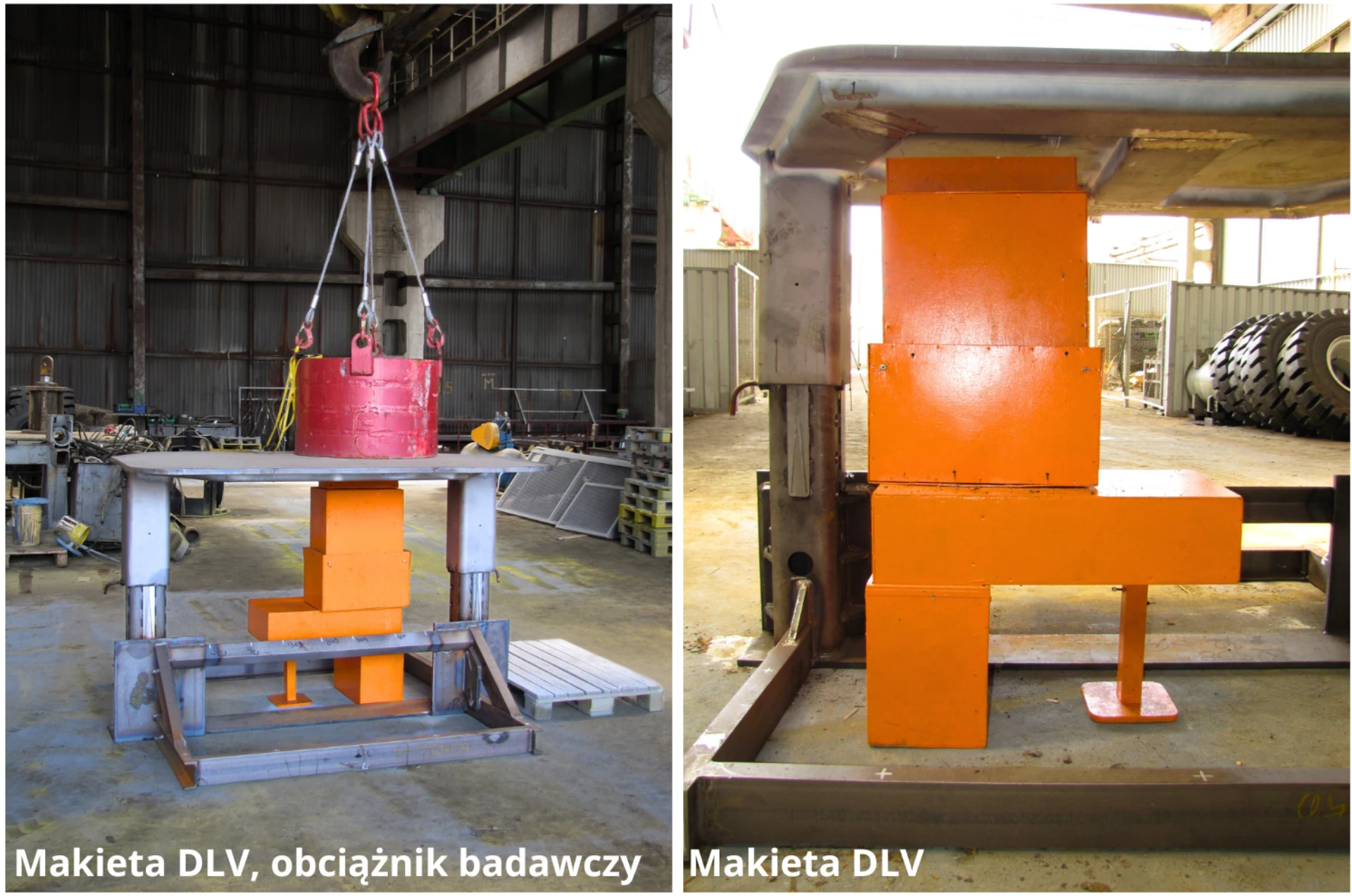
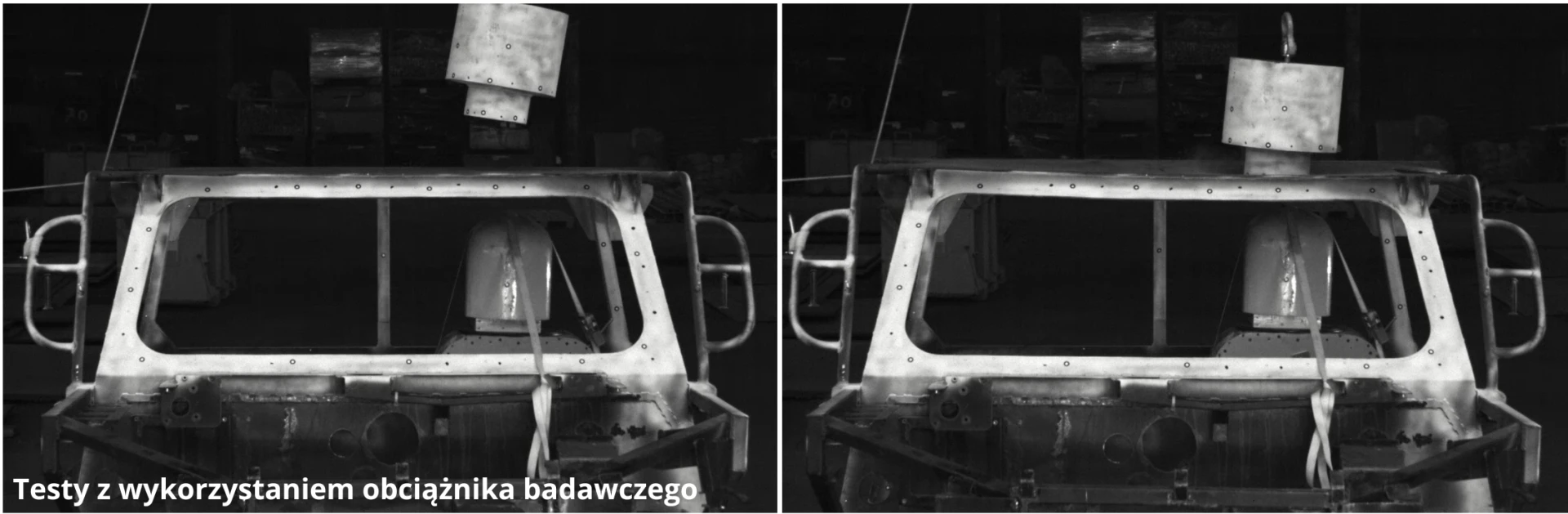
In the operating conditions of mines owned by KGHM Polska Miedź S.A., the RSPS standard is of particular importance. It requires the cab to withstand an impact energy of 60 kJ. This is an enormous force, equivalent to the impact of a very heavy rock block. During testing, the structure is examined to ensure that it cannot be pierced and that none of its components can breach the protected operator space. A key requirement is maintaining the minimum clearance between the cab structure and the DLV model, which represents the operator seated inside the cab.
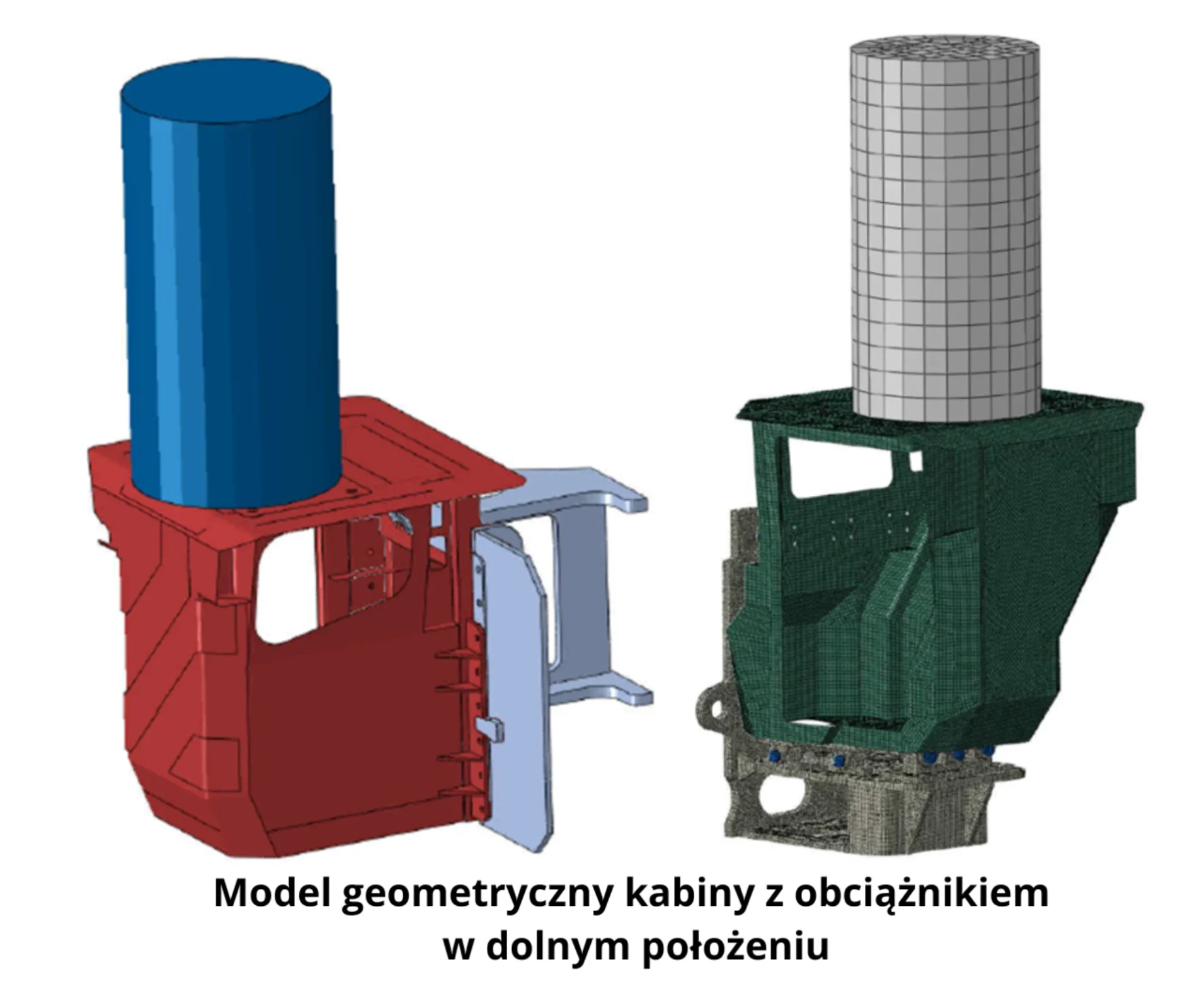
However, before any physical testing takes place, most of the work is done in a digital environment. Considering the advancement of computer systems and computational models, when designing operator protective structures, engineers at KGHM ZANAM S.A. use dynamic finite element method (FEM) analyses. This allows testing the performance of the cab under conditions corresponding to actual hazards present in the mine as early as the design stage. As a result, the cab is precisely tailored and engineered to withstand potential mining incidents and comply with legal requirements.
The analyses particularly include the simulation of an impact test on the protective structure in accordance with PN-G-59001:1992 (RSPS), using the assumptions and test conditions specified in PN-EN ISO 3449:2009 (FOPS). At this stage, a geometric model is created, followed by a discrete model of the structure, based on which displacements, velocities, and stresses in individual cab components are determined.
According to PN-G-59001:1992, the test involves subjecting the operator protective structure to a dynamic load by striking the upper components of the cab shell with a test weight. At the moment of impact, the weight has a kinetic energy of 60,000 J.
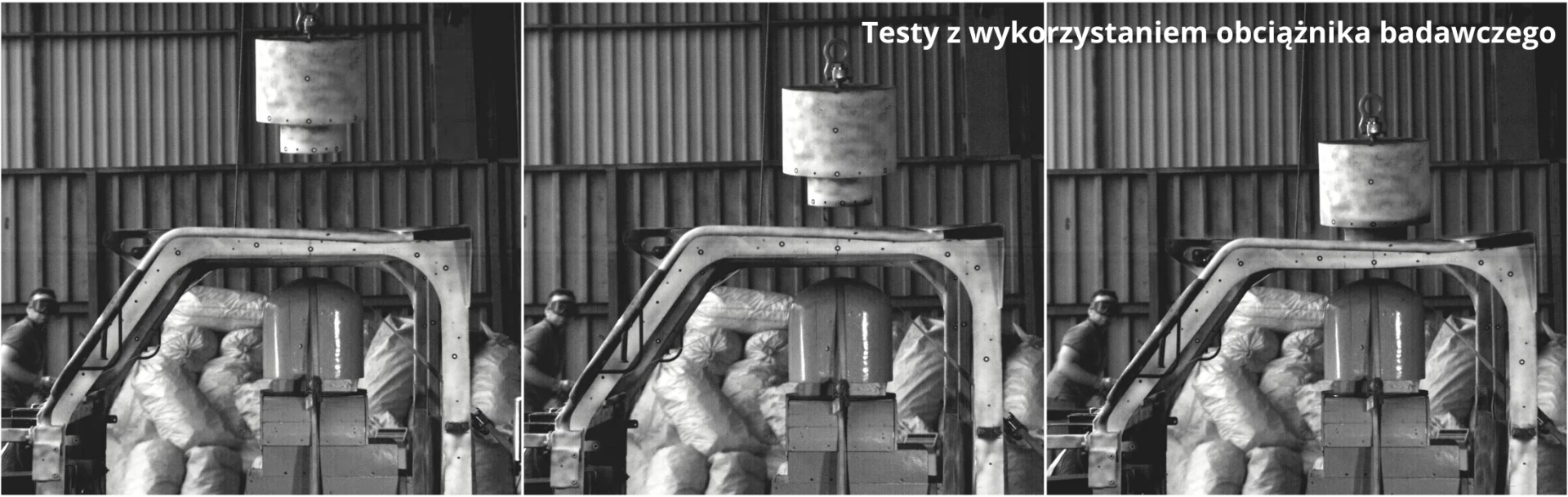
A successful test requires that the structure is not penetrated and that there is no elastic or plastic deformation that would compromise the protected operator space as defined by the DLV model, while maintaining a minimum clearance of 50 mm.
However, safety is not only about impact resistance. Equally important is the ergonomics of the operator’s workstation. An operator who spends many hours in the cab must have good visibility, an intuitive control layout, a seat with reliable suspension, and suitable environmental conditions. In the underground conditions of KGHM Polska Miedź S.A. mines, ambient temperatures can reach up to 55°C, with humidity approaching 98%. Properly selected air conditioning, ventilation, and thermal insulation of the cab have a direct impact on the operator’s concentration and reaction time.
Vibrations and noise are also significant factors. Depending on the type of machine, cabs are mounted on vibration isolators that reduce the transmission of vibrations from the chassis to the operator’s body. Another crucial element is the operator’s seat and selecting the right suspension parameters and seat belts (usually 4-point).
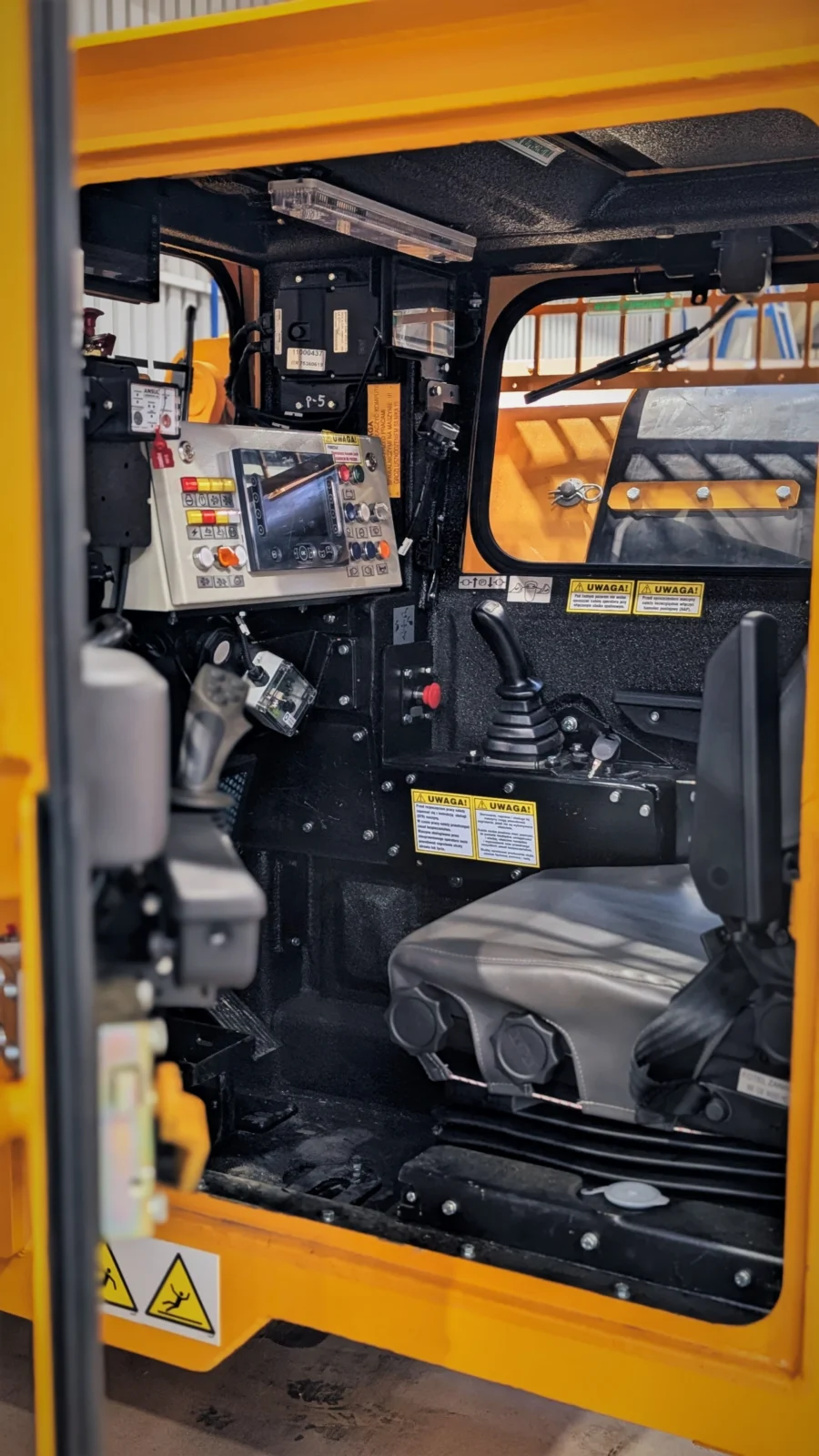
A well-designed cab thus functions as a complete system. It protects against the effects of mining incidents, supports the operator in daily work, and allows control of the machine even under the most demanding conditions. Years of experience and dozens of mining incidents that have occurred during this time show that KGHM ZANAM S.A.’s efforts to protect the health and lives of self-propelled mining machine operators yield positive results.