


BELT CONVEYOR HAULAGE SYSTEMS
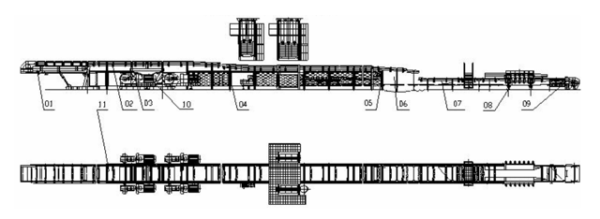
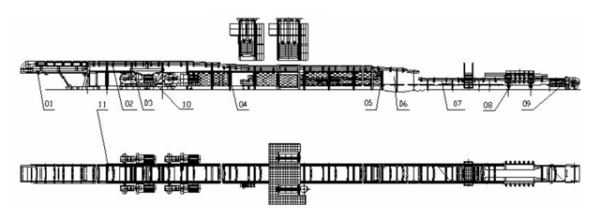
A belt haulage system consists of three interacting groups of equipment: ore loading points (known as grizzlies), rock breakers, and belt conveyors, which transport the fragmented run-of-mine material from transfer points to hoisting shafts or storage bunkers.
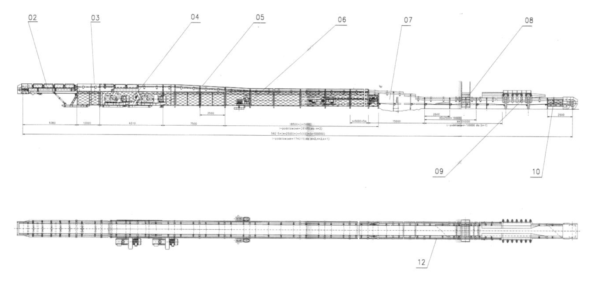
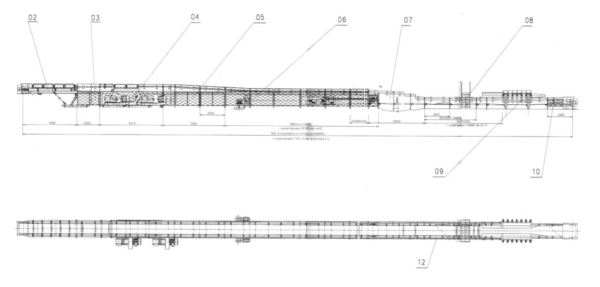
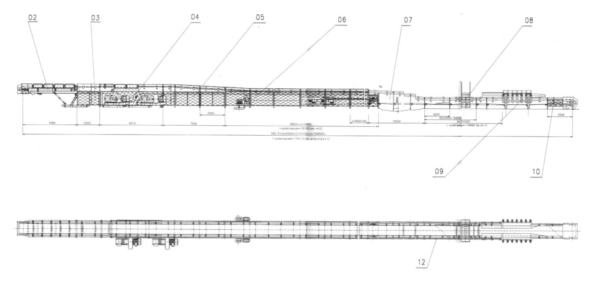
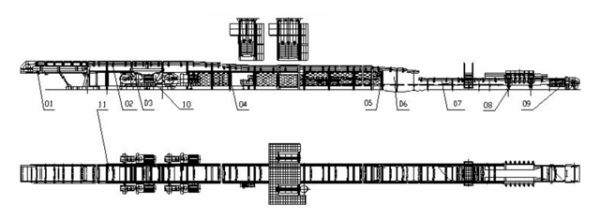
The KGHM ZANAM range includes the LEGMET range of belt conveyors featuring belt widths ranging from 800 to 1,400 mm (available in eight basic types), ore loading points, rock breakers, and auxiliary equipment: a belt winch and a belt ripper.
Dozens of KGHM ZANAM conveyors, with a total route length exceeding 170 km, currently operate in copper mines. At the same time, the company is developing solutions that automate belt haulage and reduce operating costs.
Application of belt haulage systems in mines
Belt conveyors are the primary means of continuous transport in underground mines extracting metal ores and other mineral resources. They can form an autonomous haulage system or operate alongside batch transport equipment, primarily load haul dump loaders delivering run-of-mine material to transfer points.
The selection of a haulage system depends on several parameters of the workings and the extraction process:
-
the type of run-of-mine material, particle size after fragmentation, and the size of the transported rock lumps;
-
the required hourly capacity and the resulting belt width;
-
the route length and the gradient of the workings, which determine the power of the drive station;
-
the tensioning system appropriate for the route length and the nature of the operation;
-
the available space for the drive station and the tensioning unit;
-
the need for a rock breaker and an ore loading point.
KGHM ZANAM treats each new conveyor as a unique haulage project and participates in selecting the best design solutions for it. This results in products tailored to both customer expectations and the conditions prevailing at the installation site.
LEGMET belt conveyors: available models and parameters
LEGMET conveyors differ in belt width, drive station power, capacity, maximum permissible route length, and belt tensioning method. All variants operate at a longitudinal route gradient of −5° to +5°.
|
Model |
Belt width |
Capacity |
Max. route length |
Drive station power |
Belt tensioning |
|
LEGMET 800/110 |
800 mm |
900 t/h |
1,000 m |
2–3 × 110 kW |
winch |
|
LEGMET 1000/110 |
1,000 mm |
up to 1,100 t/h |
up to 1,500 m |
1–3 × 110 kW |
winch |
|
LEGMET 1000/160 |
1,000 mm |
1,100–1,700 t/h |
2,000 m |
1–3 × 160 kW |
tower / hydraulic / dynamic |
|
LEGMET 1000/250 |
1,000 mm |
1,500–2,000 t/h |
3,000 m |
2–4 × 250 kW |
tower / hydraulic / dynamic |
|
LEGMET 1200/160 |
1,200 mm |
1,500–2,000 t/h |
2,000 m |
2–4 × 160 kW |
tower / hydraulic / dynamic |
|
LEGMET 1200/250 |
1,200 mm |
1,500–2,500 t/h |
3,000 m |
2–4 × 250 kW |
tower / hydraulic / dynamic |
|
LEGMET 1200/320 |
1,200 mm |
1,500–2,500 t/h |
3,000 m |
3–4 × 320 kW |
tower / hydraulic / dynamic |
|
LEGMET 1400/320 |
1,400 mm |
2,000–2,500 t/h |
3,000 m |
3–4 × 320 kW |
tower / hydraulic / dynamic |
Conveyors with winch tensioning
The LEGMET 800/110 and LEGMET 1000/110 models utilise winch tensioning, which maintains a constant belt tension force generated by the tensioning unit. The winch ensures smooth, constant belt tensioning by compensating for its elastic and permanent elongation, thus maintaining the correct tension force during operation.
This solution is well-suited for shorter section routes and lower capacity requirements, where design simplicity and speed of adjustment are crucial.
Conveyors with tower, hydraulic, and dynamic tensioning
The other types of LEGMET conveyors are available with tower, hydraulic, or dynamic tensioning, providing a smoothly regulated (variable) tension force. These types of systems provide smooth and rapid belt tensioning by taking up its elastic and permanent elongation.
This active tensioning continuously compensates for changes in belt forces during conveyor start-up and braking, which is crucial on long trunk routes and in complex drive systems.
These solutions excel on more demanding haulage sections: the 2–4 × 250 kW and 3–4 × 320 kW variants enable haulage on routes of up to 3,000 m with a capacity reaching 2,500 t/h. Models with a 160 kW drive support routes of up to 2,000 m.
Ancillary belt haulage equipment
In addition to conveyors, this category includes five devices that support run-of-mine material preparation, loading, and belt maintenance.
Rock breakers: URB/Klim and URB/ZS
URB devices break up oversize rocks before they are loaded onto the conveyor belt. Efficient working attachments allow the rock to be broken with a high impact force, while a maximum boom slew angle of 40° gives the operator access to the entire surface of the grizzly screen.
KGHM ZANAM is also developing remotely controlled rock breakers. These solutions allow operators to work away from potentially hazardous areas or places where working conditions do not permit their constant presence. Remotely operated equipment is crucial for enhancing occupational safety.
PZR-800 ore loading point
The PZR-800 is a device that ensures the smooth transfer of run-of-mine material onto the conveyor, minimising material spillage and the unevenness of the material stream. A well-designed loading point directly impacts the service life of the belt and idlers.
WT belt winch and ZT belt ripper
The WT belt winch is used to draw the belt during the splicing process, for example, during replacement, while the ZT belt ripper is an auxiliary device that facilitates the separation of belt plies during splicing. Both devices reduce downtime associated with conveyor belt maintenance.
Automation of belt haulage
The company is implementing solutions to automate belt haulage, including the Belt Haulage Automation System, which reduces the scope of manual inspection activities performed by operators before conveyor start-up. Automation shortens the start-up time of the conveyor route and reduces the number of personnel present in the vicinity of operating equipment.
Frequently asked questions about belt haulage systems
What equipment does a belt haulage system consist of?
Ore loading points (known as grizzlies), rock breakers, and belt conveyors. These are supplemented by auxiliary equipment for belt maintenance: a winch and a ripper.
What capacity do LEGMET belt conveyors achieve?
They range from 900 t/h in the LEGMET 800/110 model to 2,500 t/h in the 1200/250, 1200/320, and 1400/320 models, assuming a run-of-mine material density of 1.7 t/m³ and a fill factor of 0.8.
What is the maximum length of the conveyor route?
Up to 3,000 m for conveyors with 250 and 320 kW drives. Models with a 160 kW drive support routes up to 2,000 m, and variants with winch tensioning cover shorter section routes.
How do the belt tensioning types differ?
Winch tensioning maintains a constant tension force and is a simpler solution used on shorter routes. Tower, hydraulic, and dynamic tensioning operate with a variable, smoothly regulated tension force, compensating for load changes during start-up and braking at higher power outputs and longer route lengths.
Can rock breakers be operated remotely?
Yes. KGHM ZANAM offers rock breakers adapted for remote control, which allows the operator to be kept clear of the hazard zone.
Select a belt haulage system for your facility
Are you planning a new conveyor route or the modernisation of an existing haulage route? Contact KGHM ZANAM: we will help you select the LEGMET model, tensioning type, and accompanying equipment suited to the parameters of your working and the required capacity.
Showing 1–12 of 13 results
Products